(Scroll down for the english version)
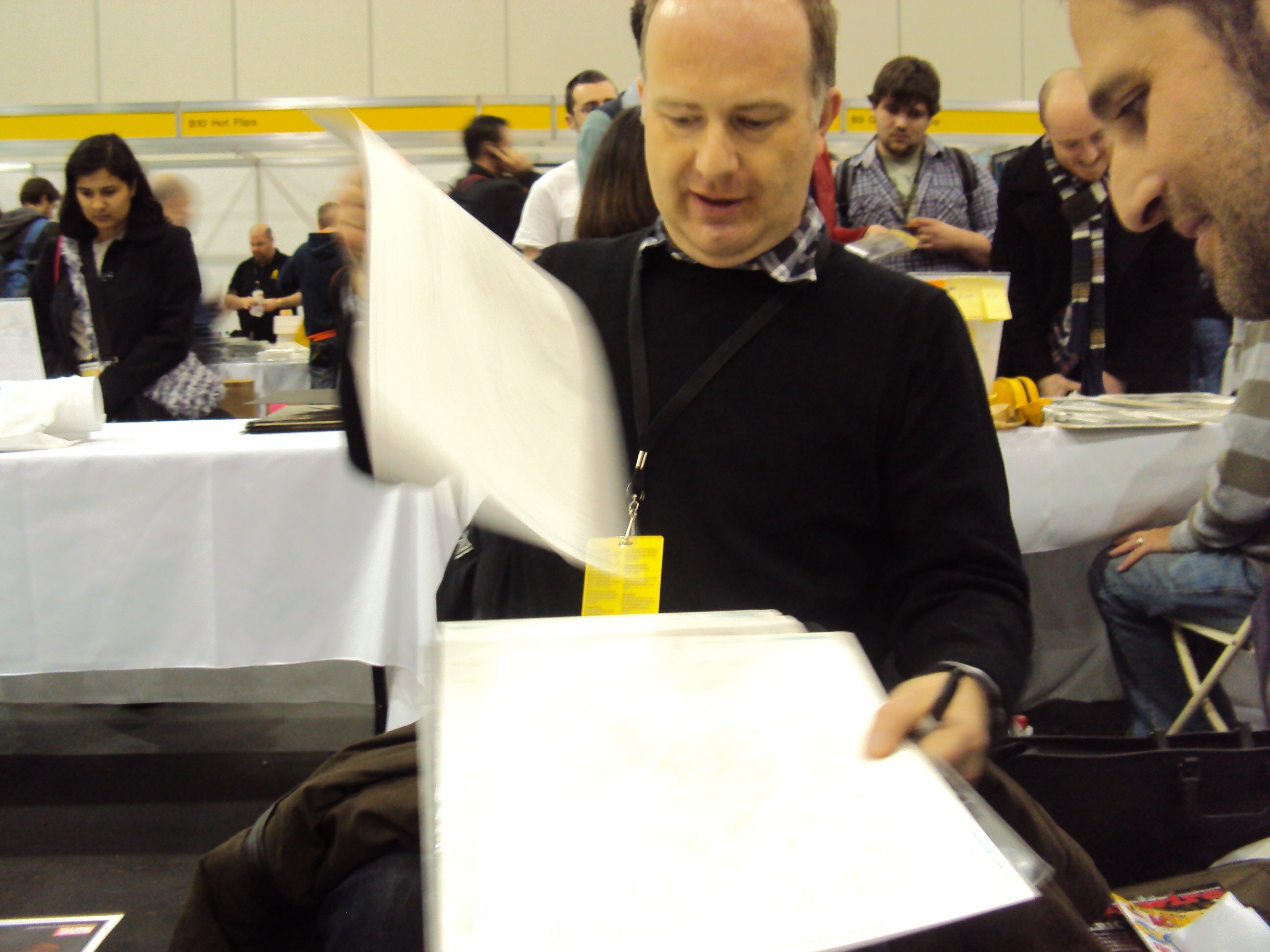
Incontriamo Mark Buckingham alla fine della prima giornata della London Super Comic Convention insieme a sua moglie Irma: sono una coppia adorabile e seppure la stanchezza comincia a farsi sentire, sono disponibilissimi e si chiacchera e ride insieme un po’ su tutto.
Filippo DOUbLe SHOt: Ciao Mark! Come stai?
Mark Buckingham: Tutto bene grazie!
FDS: Vorrei iniziare subito questa intervista chiedendoti della tua esperienza con Miracleman, considerato il grande apporto che hai dato all’opera e visto che in Italia è ancora purtroppo inedita e c’è molta curiosità al riguardo. Raccontaci dall’inizio questa splendida avventura.
MB: All’epoca lavoravo per la DC Comics e Neil Gaiman stava per succedere ad Alan Moore per continuare Miracleman: all’inizio Neil non aveva ancora trovato un disegnatore che lo soddisfasse per il suo progetto, così mi feci avanti e gli sottoposi così i miei disegni, più che altro come fan (al tempo non avevo ancora finito l’università). Per me quindi era solo uno sketchbook e invece mi ha aiutato molto. Con Miracleman ho potuto portare tutta la mia personalità, e ho dato anche qualcosa di più di me, perchè la collaborazione con Gaiman è stata l’esperienza perfetta. Insomma un bellissimo inizio.
FDS: In particolare mi racconti del famoso e bellissimo episodio in stile Andy Warhol?
MB: Nel ciclo “The Golden Age” non avevamo intenzione di concentrarci sul supereroe, non volevamo che diventasse una storia incentrata sul singolo, ma piuttosto volevamo focalizzarci sull’effetto che Miracleman poteva avere sulle vite dei vari personaggi che incontrava. Così ogni storia era diversa, perché diverse erano le personalità e per rispecchiare fino in fondo la varietà “umana”, dovevamo di volta in volta cambiare anche stile della narrazione e del disegno. Ci sono episodi molto energici, d’impatto, altri più lineari e semplici, alcuni in bianco e nero, ecc. Ho potuto sperimentare molto e metterci tanto di mio. È stato così anche per la storia con Andy Warhol, nella quale ho utilizzato fotogrammi, collage e un misto di altre tecniche diverse, tutte armonizzate, per far sì che l’episodio in sé fosse pervaso dal suo spirito.
FDS: Con chi hai preferito collaborare?
MB: Naturalmente con Gaiman mi sono trovato benissimo, con lui è facile sviluppare idee e sperimentare e infatti oltre che a Miracleman ho lavorato anche su Sandman, Death, compresi altri progetti satellite come statue, anniversari, etc . E poi Paul Jenkins su Spider-Man, perché abbiamo la stessa visione nel modo di costruire un fumetto, a entrambi piace arrivare al cuore di una storia ed esprimere l’essenza in maniera chiara affinché i lettori la colgano. Amiamo entrambi le narrazioni intime, con sequenze chiare, visivamente semplici da seguire, non mi piace disorientare il lettore oppure colpirlo con una pagina troppo ricca, perché io stesso adoro poter leggere in maniera lineare lasciando che una storia mi rapisca e mi parli. Ecco per me lo storytelling è veramente fondamentale. Poi ovviamente con Bill Willingham, un grande, per tutti i motivi che potete immaginare.
FDS: Proprio a proposito dello storytelling, uno dei tuoi punti di forza sicuramente, io trovo che le tue inquadrature siano geniali e sempre innovative, sei un regista perfetto.(n.d.r.: nel frattempo mi sta facendo vedere delle tavole di Fables bellissime).
MB: Mi fa piacere se il mio stile piace, ma non mi considero pieno di talento, cerco solo di raccontare le vicende in maniera da esaltare il più possibile la storia e così utilizzo quello che ritengo il punto di vista più adatto, un’inquadratura più significativa. Il mio intento è quello di raccontare con chiarezza, come dicevo prima, suscitare le emozioni che solo il fumetto, nell’unione perfetta tra testo e disegno, può dare. Non mi piace puntare solo sull’impatto visivo, si rischia che il lettore si perda. Vorrei che la lettura fosse fluida, mi sento molto “classico” in questo.
FDS: C’è qualche personaggio o serie che avresti voluto disegnare e non hai ancora fatto?
MB: È una bella domanda, vediamo… Ho adorato tanto Hellboy per esempio, e sognavo di poterlo disegnare, ma come si fa da appassionati. Lo seguo sempre e mi piace molto anche B.P.R.D., ma non so se ora come ora vorrei cimentarmi ancora con queste serie o con altre che mi piacevano tanto e mi piacciono anche adesso, perchè quello che amo di più è poter disegnare i miei personaggi, le mie creazioni.
FDS: Un’ultima domanda: quando verrai in Italia?
MB: [ride] Mi piacerebbe, mi dicono anche che si mangi molto bene [anche la moglie sorride e ci si lascia calorosamente con un “arrivederci”. Grandi Mark e Irma!]


English version
We meet Mark Buckingham and his wife Irma at the end of the first day of the London Super Comic Convention: they are adorable and despite the weariness they are still approachable and friendly, so we talk and laugh together about a bit of everything.
Filippo DOUbLe SHOt: Hallo Mark! How are you doing?
Mark Buckingham: I’m doing well!
FDS: I’d like to start asking you about Miracleman, since you made a major contribution to it. Unfortunately it’s still unpublished in Italy, but there’s a lot of interest for it. Please tell us how it all began.
MB: At the time I used to work for the DC Comics and Neil Gaiman was about to take over from Alan Moore and he was looking for an illustrator who fulfilled his needs. So I put forward my drawings, just in case, because I was his fan. It was just a sketchbook for me (I wasn’t done with the university yet) and instead it turned out to be a great helpful experience to me. With Miracleman I could bring out my personality, I could express myself better. The collaboration with Gaiman was a perfect experience. A real good start indeed.
FDS: Specifically, would you please tell us about the famous and amazing Andy Warhol’s episode?
MB: In the series “The Golden Age” we didn’t mean to focus on the superhero, we didn’t want it to become a story about a single character, we rather wanted to show the effects that Miracleman could have on the different characters he would be meeting. Every story was different, like the characters, and in order to reflect this “human” variety we had to change style every time. There are energetic and strong episodes, simple and fluent ones, some are in black and white, and so on. I had the chance to experiment a lot and to express myself in many ways. This is also what happened in the Andy Warhol’s episode: I used photographs, collage and a mixture of different techniques in order to make the story pervaded with Warhol’s spirit.
FDS: Who did you enjoy mostly to collaborate with?
MB: With Gaiman, of course, it was incredibly good: with him it’s easy to develop ideas and experiment, and in fact, besides Miracleman, I also worked on Sandman, Death, other projects like statues, anniversaries, etc. I have to mention Paul Jenkins too: we both share the same view when it comes to build a comic, because we both love to go to the heart of a tail and tell its core clearly, in order to make the readers catch it. We prefer intimate stories drawn with clear sequences, visually easy to follow: I don’t like to puzzle the reader or strike him with impressive pages, because I personally love to read fluently and let the story capture me and talk to me. I think the storytelling is essential. Let me add the big Bill Willingham as well, working with him is incredible for many reasons that you can imagine.
FDS: And about the storytelling (certainly one of your strengths), I find your shots, hang shots and framing really brilliant and innovative, you’re a perfect director. [In the meanwhile he is showing me some of his wonderful Fables illustrations]
MB: I’m glad you like my style, but I don’t consider myself talented, I just try to tell the story in a way I can enhance it the most, so I use what I think it’s a suitable shot, the most meaningful perspective. My intention is to tell the story clearly, as I said before, to get the people feel the emotions that only a perfect combination between text and illustration can arouse. I don’t like an impressive style, the reader is likely to get lost. I rather like a fluent reading, I think I’m a “traditionalist” in this regard.
FDS: Is there still a character or a series you would like to draw?
MB: Nice question, let’s see… I’ve loved Hellboy for example and I used to dream I could draw it, just because I was fond of it. I also like B.P.R.D., but today I’m not sure I would illustrate this kind of series: I’m more into create my own characters and drawing my new creations.
FDS: One more question: when will you come to Italy?
MB: [laughing] I’d like to, everybody says the food is terrific there! [Also his wife smiles and we warmly say “arrivederci” to each other. You’re great, Mark and Irma!]
(Traduzione: Sara Cipolletti)